Ask an Adventure Cycling Tour Leader: Dealing with Foul Weather

When I’m at home, I typically postpone a ride when the weather isn’t cooperating. That’s not always an option during a bike tour. How will I cope?
Dear Fair Weather Pedaler,
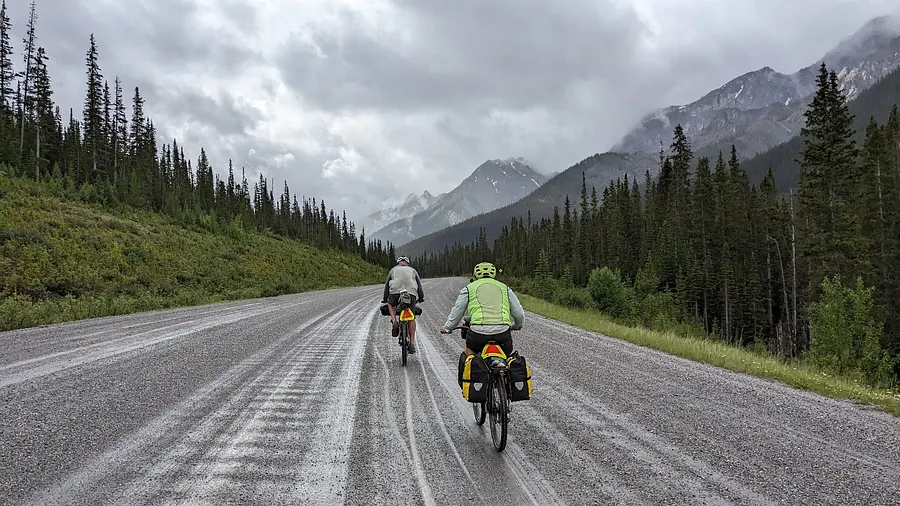
It’s astute of you to think about the weather on your upcoming tour. And you’re correct. You’ll probably have to ride in less-than-ideal conditions to keep moving down the road. When planning for inclement weather, rain might be the most obvious example. It’s not very fun being soggy, muddy, and worried that your bike is getting grimy. So, let’s talk about rain and then think about some other challenges as well.

I just finished leading the TransAm Express, which starts in Washington, D.C., and ends 75 days later in Florence, Oregon. You can be assured that we experienced all kinds of weather. In an early conversation, one participant expressed concern about rain, saying it was his “personal kryptonite.” I found that interesting, because honestly, I don’t mind riding in a shower — especially if the temperature isn’t that cold. In some sense, I find that rain adds to the experience of a tour. It heightens my senses to the environment in a way that I don’t always experience on a fair and sunny day.
Gear is important though. Just don’t expect to stay completely dry. Truly waterproof rain gear generally doesn’t breathe very well, and you may end up wet inside it from the sheer exertion. So instead of planning to keep all the water out, concentrate on having the right layers to stay warm when and where you need to. For me, full-fingered gloves from Showers Pass and some neoprene socks make a world of difference. Your core is generating a lot of heat, but your extremities might have a harder time being cold and wet. And keep something handy that you won’t wear until you get to a rest stop, camp, or hotel. Some items that come to mind are a light fleece or wool shirt and a dry pair of socks.
Gear doesn’t only include things to keep you dry. You’ll want to keep other essentials dry, too. A truly waterproof bag for your phone, for example, will save you stress later, as your phone might not work if the charging port gets wet. If you typically use your phone for navigation, it’s worth thinking about alternatives, so that your device isn’t exposed to the elements. Most bike computers are totally fine in the rain, although those with touch screens might behave a bit oddly if raindrops are really coming down.
While your phone is worth protecting, don’t get too caught up in keeping your bike pristine while on tour other than getting the grit and debris off your drivetrain. Some campgrounds and bike-friendly accommodations have a hose to help with this. If they don’t, never fear. Just use a water bottle to squirt clean water (no electrolytes!) onto all the important parts, like your chain, cassette, and brakes. You can give it a thorough cleaning later, but at least get the worst off before it does any damage.
While I am comfortable riding in the rain — and hopefully you can be, too — it’s important to remember that your bike handles differently in those conditions. Take it especially easy on the downhills and around curves. And if it’s raining hard enough that drivers can’t see you, get off the road until it lets up.
Mentally, consider precipitation a part of the experience. If you’re fortunate enough to be traveling through a town, it’s a chance to hang out at the local coffee shop and chat with the locals. Try your best not to leave any puddles! If there aren’t any commercial businesses where you are riding, churches can be a good place to take shelter under an overhang and regroup. When you’re in a pinch, many strangers will be sympathetic enough to offer you a place to wait out a storm.
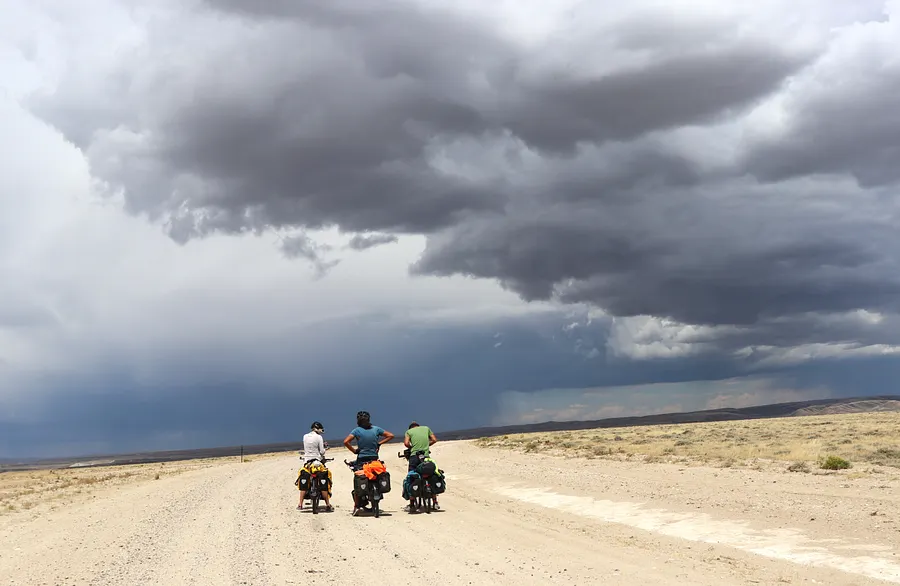
Rather than rain, I’d say that my personal kryptonite is wind. To me, it’s much more demoralizing than water falling from the sky. So, what to do on those days when a fierce headwind is blowing? I’ve found it’s as much mental and emotional as it is physical. Accept the fact that it’s not only going to take longer to complete your planned miles, but it’s also likely going to be harder, too. Don’t exhaust yourself by trying to keep a normal pace. Find places you can stop that give you a break from the wind. A strong sidewind that is blowing you off the road or into traffic can be dangerous, so if you need to stop, stop.
It’s worth mentioning that the wind commonly picks up later in the day. So, if you’re planning to cover 60 miles, and let’s say that usually takes about 6 hours, perhaps you could get up early and get your riding done before noon. As a bonus, riding early is also the primary way to mitigate heat.
There are going to be unknowns and surprises on any tour, but it can be helpful to at least have an idea of what to expect each day as far as weather. There are a lot of apps out there, including Epic Ride Weather, Windy, and Headwind. I’m a fan of Epic Ride Weather. You can sync it to Ride with GPS, select your route, and input your forecasted start time and anticipated pace. It then displays visuals depicting the weather throughout your ride — temperature, wind speed and direction, cloud cover, and precipitation. I like to play around with how my start time impacts all these factors.
While I encourage you not to become too laser-focused on what the wind will do (hopefully, you’ll keep pedaling regardless of whether it’s 8 miles per hour or 15), it’s still a useful tool for deciding just how handy your rain gear should be on any given day.
Weather is one of those things that is out of our control, and it certainly adds adventure to any bike tour. I’ve now led the TransAm Express twice, and although it was the exact same route, I found that my most recent experience wasn’t the same as the first time around. Isn’t that part of the fun of it? Letting go of the things we can’t control and take each day as it comes. Raindrops and all. Happy touring!