Seattle to Fort Flagler
Ferry from downtown Seattle to island roads, beachside camping, and a historic fort overlooking the waterways of Puget Sound.
- Distance
- 58.7 miles
- Surface
- 100% paved
- 1–2 days
- Route Type
- Point to Point
Get the Route in Ride with GPS
Access the details and download free digital maps
 Open in Ride with GPS
Ride the Seattle to Fort Flagler
Ferry from Seattle to Bainbridge Island, then ride across the island and the northern Kitsap Peninsula to Marrowstone Island’s hike-and-bike camp at Fort Flagler State Park.
What to Expect
A ferry-linked coastal overnight with substantial climbing hidden inside approachable mileage. Riders can camp at Fay Bainbridge Park early in the route for a slower two-night trip, or continue to Fort Flagler in one long day.
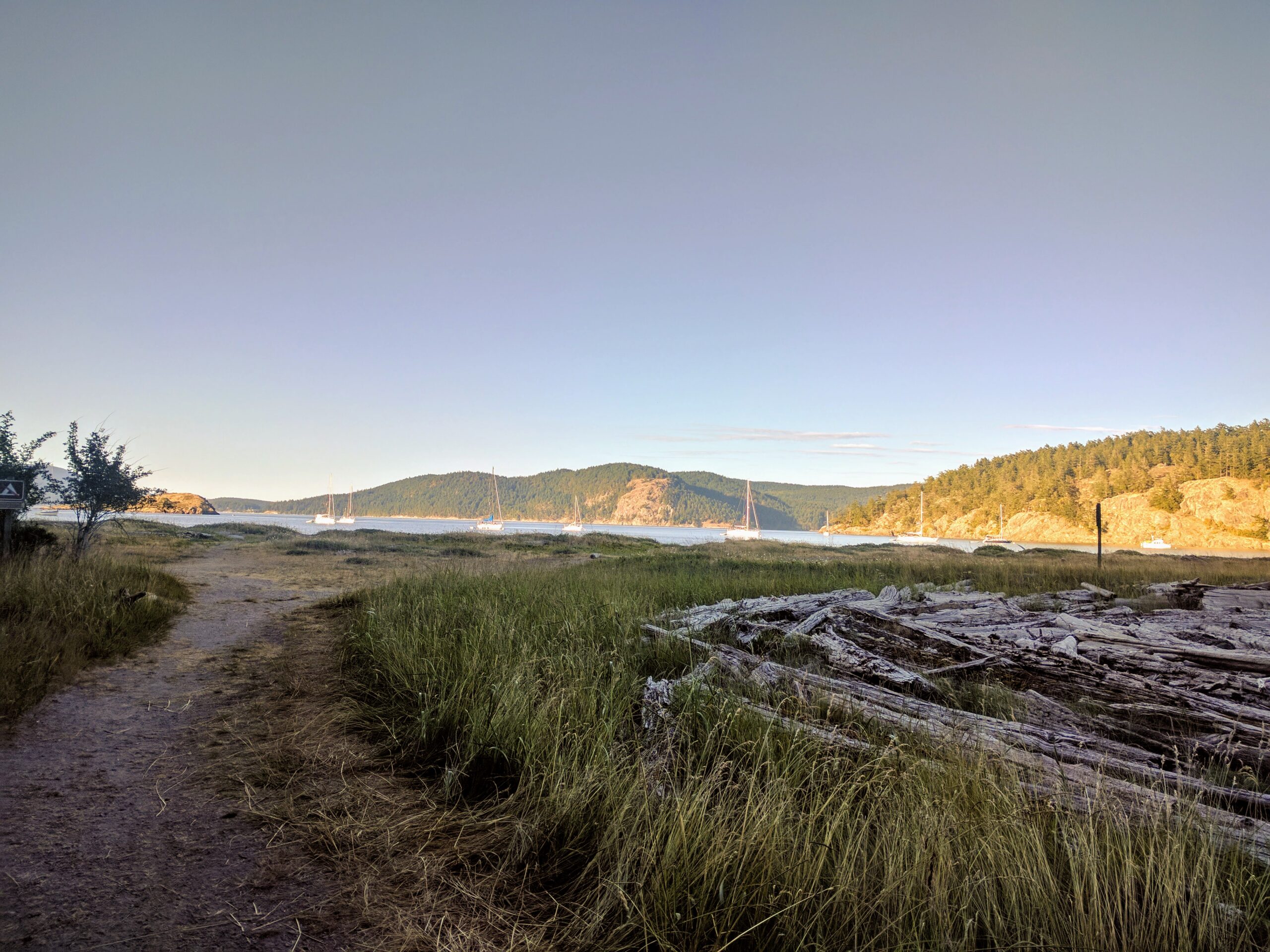
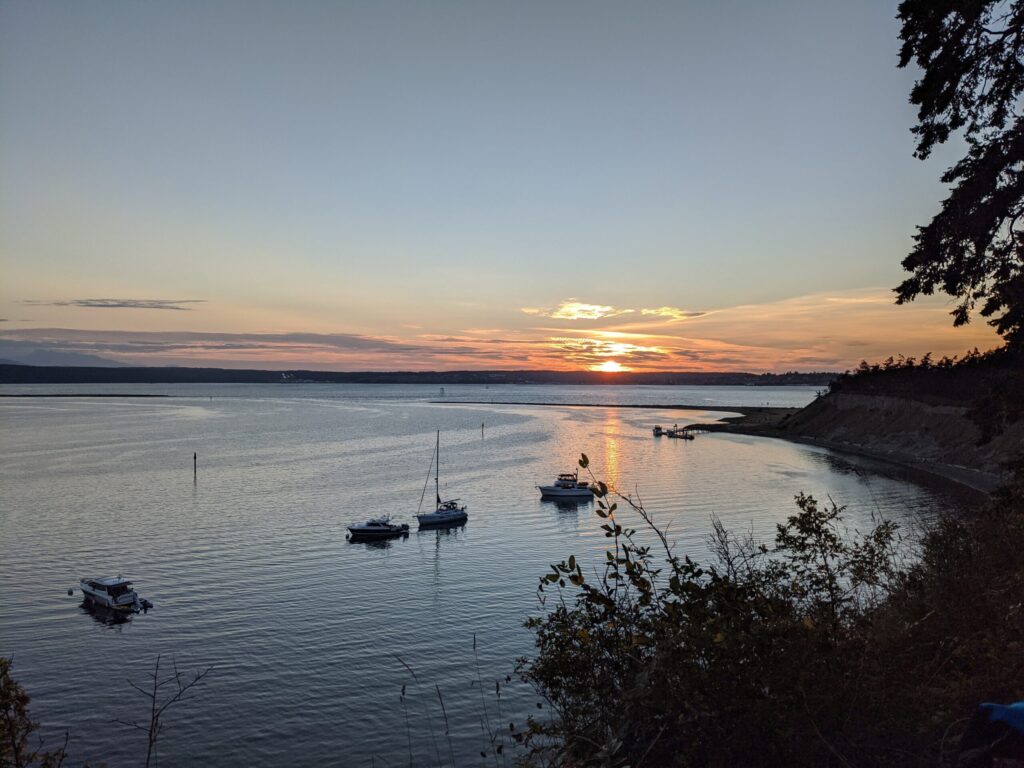
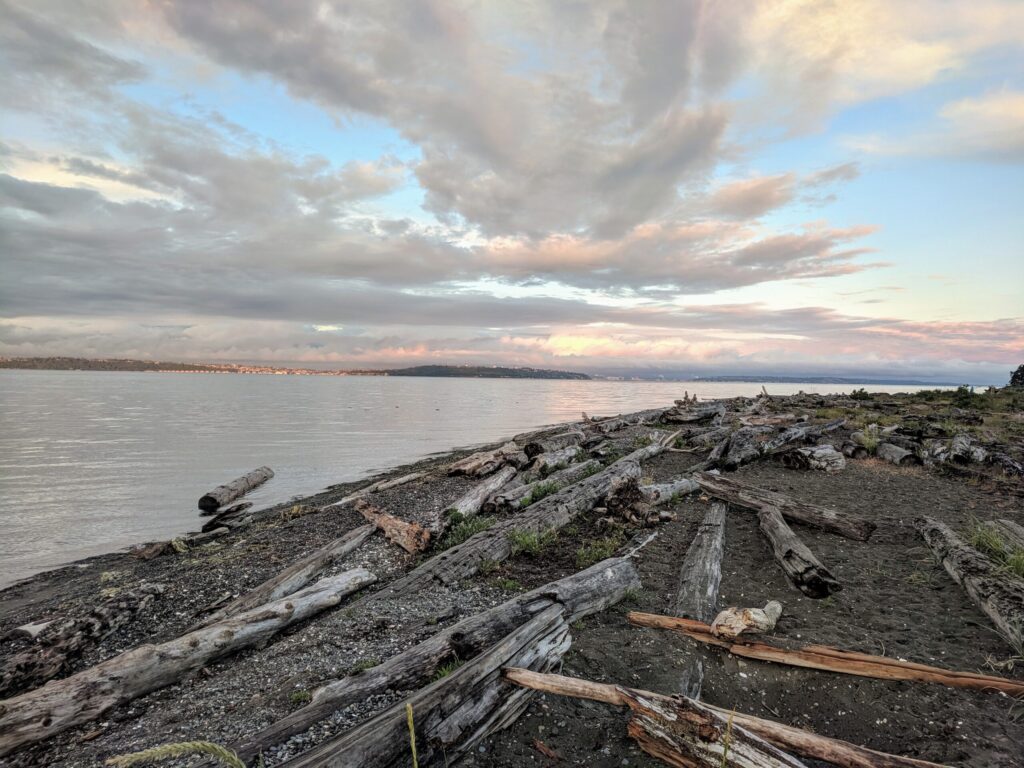
The ferry ride is part of the experience, not merely transportation. Seattle’s skyline gives way to island communities, quiet shoreline, and a former coastal-defense fort with views toward Port Townsend and the Olympic Mountains.
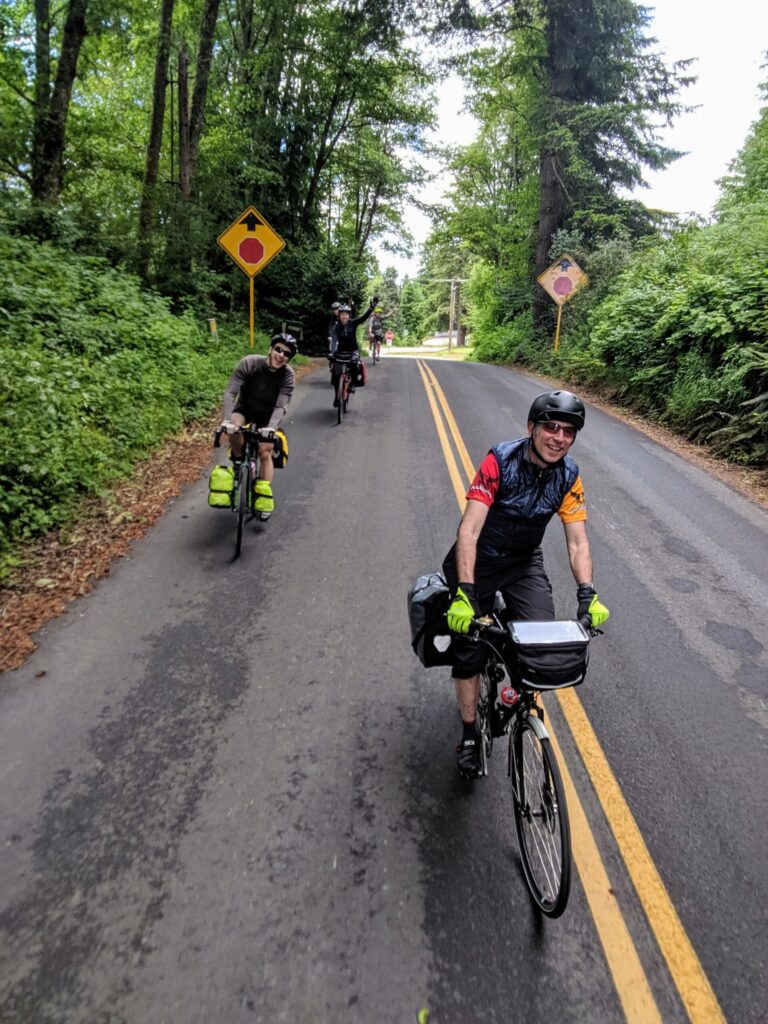
The route includes about 8.6 miles of ferry travel and gains 3,929 feet. The riding is almost entirely paved, with frequent rolling hills and several sustained climbs. Expect forested island roads, glimpses of Puget Sound, small harbor towns, and open water views on Marrowstone Island.
Bainbridge Island and the Kitsap Peninsula provide regular cafes, groceries, and other services. Options thin on Marrowstone Island and near the final camp, so arrive with dinner, breakfast, and needed supplies.
Late spring through early fall offers the longest days and most dependable camping weather. Rain, cool marine air, fog, and wind can occur year-round, while winter brings short daylight and reduced campground services.

Seattle to Fort Flagler Photos

Plan Your Ride
Choose a one- or two-night itinerary, confirm the ferry schedule and campsite, and let the crossings set the rhythm of this Puget Sound ride.
Trip Planning & Logistics
The route begins with the Seattle–Bainbridge ferry and ends at Fort Flagler, so riders need a return plan. Options include reversing the route, riding to another ferry connection, or arranging a pickup. Washington State Ferries accepts bicycles, but check schedules, fares, loading procedures, and service disruptions before travel.
A road, touring, hybrid, or gravel bike with low enough gearing for repeated hills is appropriate. Bring lights, rain and wind layers, a lock, and camp gear.
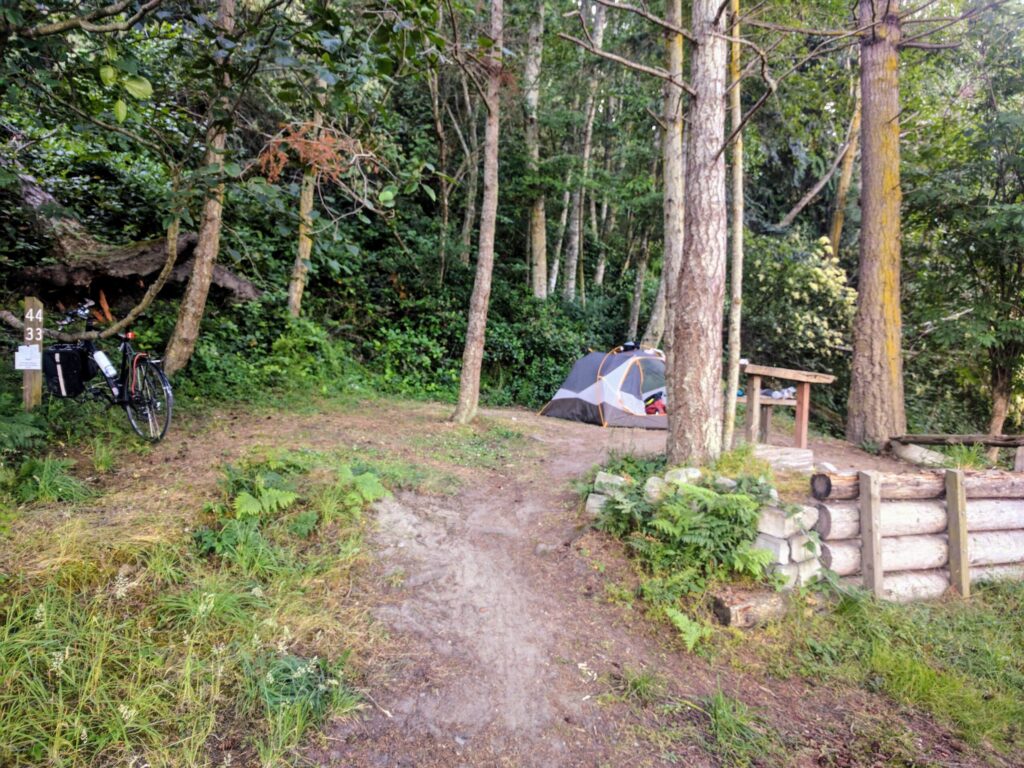
Fay Bainbridge Park can divide the ride into shorter days, and Fort Flagler Historical State Park offers camping, including hike-and-bike sites. Verify current availability, reservations, seasonal services, water, and fire restrictions before departure.
Seattle and Bainbridge Island offer abundant choices, with additional cafes and markets along the peninsula. Purchase camp meals before the final island stretch, and carry enough water for the finish.
Expect narrow roads, ferry-terminal traffic, limited shoulders, and frequent hills. Use lights, ride predictably, secure your bike as directed aboard the ferry, and check ferry alerts, park notices, and marine weather before leaving.
Routes change. Bridges wash out, businesses close, and construction pops up overnight. We strive to keep routes updated as those things happen. When we learn about a change, we reroute around sections that have become dangerous or are temporarily closed for road work, bridge outages, or construction, and we update service information as businesses open, close, or move. Digital routes are updated as soon as we’ve reviewed a reported issue.
You’re often the first to spot these changes out on the road. Help us keep this route accurate for the next rider by reporting anything you notice with our Route Feedback Form.
This Route Is Part of a Community Effort
Short Routes are cyclist-submitted and Adventure Cycling approved, with the mission of inspiring more adventures from your own backyard. All possible thanks to the dedicated support of our members and donors.
-

Explore the Short Routes Network
Accessible, beginner-friendly, free routes, expanding opportunities for bicycle travel to more riders.
Learn about the Network -
Support Route Development
Our members are the reason we can offer three route networks tailored for specific experiences and riders.
Become a Member -

Stay Connected
Find your stoke with our newsletter all about routes, gear, stories, and cycling news in your inbox twice a month.
Sign up for Bike Bits
Frequently Asked Questions
A collection of free, cyclist-submitted routes built for shorter trips. Each route is designed for a trip of one to five nights, ranging from a quick overnight ride to a longer multi-day adventure. It’s the most accessible of our three route networks: no purchase required, no advanced experience assumed, just a well-vetted route you can ride over a weekend or a week off.
We launched Short Routes in August 2022 with an initial set of 12 routes, created specifically because our epic, long-distance routes don’t work for everyone. Someone with a week of vacation, or someone new to bike touring, needs a different starting point. We developed that first collection in partnership with BIPOC, LGBTQ+, women, and intersex cyclists, with routes centered near major cities like Los Angeles, Seattle, Minneapolis, Austin, Atlanta, Washington, D.C., Philadelphia, and Boston, so people could find a route close to home rather than needing to travel somewhere remote first. Since then, the collection has grown through rider submissions and partnerships with other organizations like East Coast Greenway Alliance.
It’s the only one of our three networks built primarily by the community, for the community. Typically, the route builder is local to the area, providing special knowledge about transportation logistics, services, points of interest, and more. Anyone can submit a route, but every submission goes through a staff review: checked for traffic speeds, shoulder width, surface conditions, and whether services like food, water, and camping are realistically spaced for a loaded touring bike.
Riders who don’t have weeks to spend in the saddle, and riders who’ve never done a multi-day bike trip before. The collection was built with input from locals and includes routes near major cities, so that cyclists who live far from the endless miles of gravel roads or remote bikepacking routes have great routes mapped near them.
No. Many of our Short Routes are built to be beginner-friendly, though all are worth riding no matter your experience level. Because each one runs just one to five nights, it’s a much lower commitment than a cross-country tour, which makes it a good place to start if you’ve never done a multi-day ride.
Anyone can submit. You don’t need any official affiliation with Adventure Cycling. Head to our route submission form, and come prepared with three things: at least 10 photos from the route, a written description covering the highlights, navigation notes, services along the way, seasonal considerations, and a short bio about you as the route’s creator, and a Ride with GPS route that includes automatic cuesheetsand custom points of interest for things like lodging, food, bike shops, and any hazards.
It needs to take a beginner one to five nights, cover 50 to 200 total miles, and be located anywhere in the U.S. or Canada. Beyond that, we’re mainly checking for safety. A route can’t put a fully loaded touring cyclist through excessive hazards, so we look at things like traffic speed, shoulder width, road surface, and whether food, water, and camping are realistically spaced along the way.
It helps if you rode it within the past year or so. Those submissions move through review faster, since conditions on the ground are more likely to still match what you’re describing. Older routes can still be submitted, but they may take longer to review since we may need to double-check that services and conditions haven’t changed.
Review typically takes several weeks. We check every submission for safety and accuracy and reserve the right to edit before publishing. If your route is approved, we’ll follow up with you by email.