Advocacy in Action: How Adventure Cycling Is Showing Up for Bike Travel
If you ride a bike, you have a stake in advocacy.
That’s true whether you’re crossing the country, commuting to work, riding to the trailhead, or cruising to get ice cream. Every ride depends on more than a bike and a route. It depends on safe roads, connected trails, access to public lands, bike-accessible transportation options, and continued investment in cycling infrastructure.
At Adventure Cycling, we advocate for systems that make bike travel possible. That means showing up where decisions are made — with partners, agencies, coalitions, and members — to help make bike travel safer, more accessible, and more connected.
So far this year, that work has taken shape across four connected areas:
- Improving the U.S. Bicycle Route System
- Amplifying policy efforts that matter to riders
- Supporting partner-led campaigns
- Creating clear opportunities for our community to take action
Here’s a deep dive into each of these areas, showing our progress to date and how you can speak up for better, safer cycling, too.
The USBRS Is a Living System
A national route network is not built once and then left alone.
Roads change. Trails are extended. Bridges are built. Communities grow. What may have been the best available route ten years ago may no longer be the safest, most intuitive, or most connected option today. That is why long-term stewardship of the U.S. Bicycle Route System matters.
Adventure Cycling serves as the national technical coordinator for the USBRS, working in partnership with state departments of transportation and AASHTO to support the development and improvement of the nation’s largest official cycling network. Official designation gives bike travel a place in transportation planning and legitimizes long-distance cycling as part of the transportation system, making it easier for state and local agencies to dedicate funding, staff time, technical expertise, and long-term investment in safer, more connected bicycle routes.
This spring’s USBRS designation cycle is a story of stewardship. As better bicycle and pedestrian infrastructure is built along USBRS corridors, Adventure Cycling works to help update the national system to reflect those improvements.
That shows the system working exactly as it should: actively maintained, responsive to better local infrastructure, and strengthened through years of coordination among Adventure Cycling, AASHTO, state DOTs, and local partners.
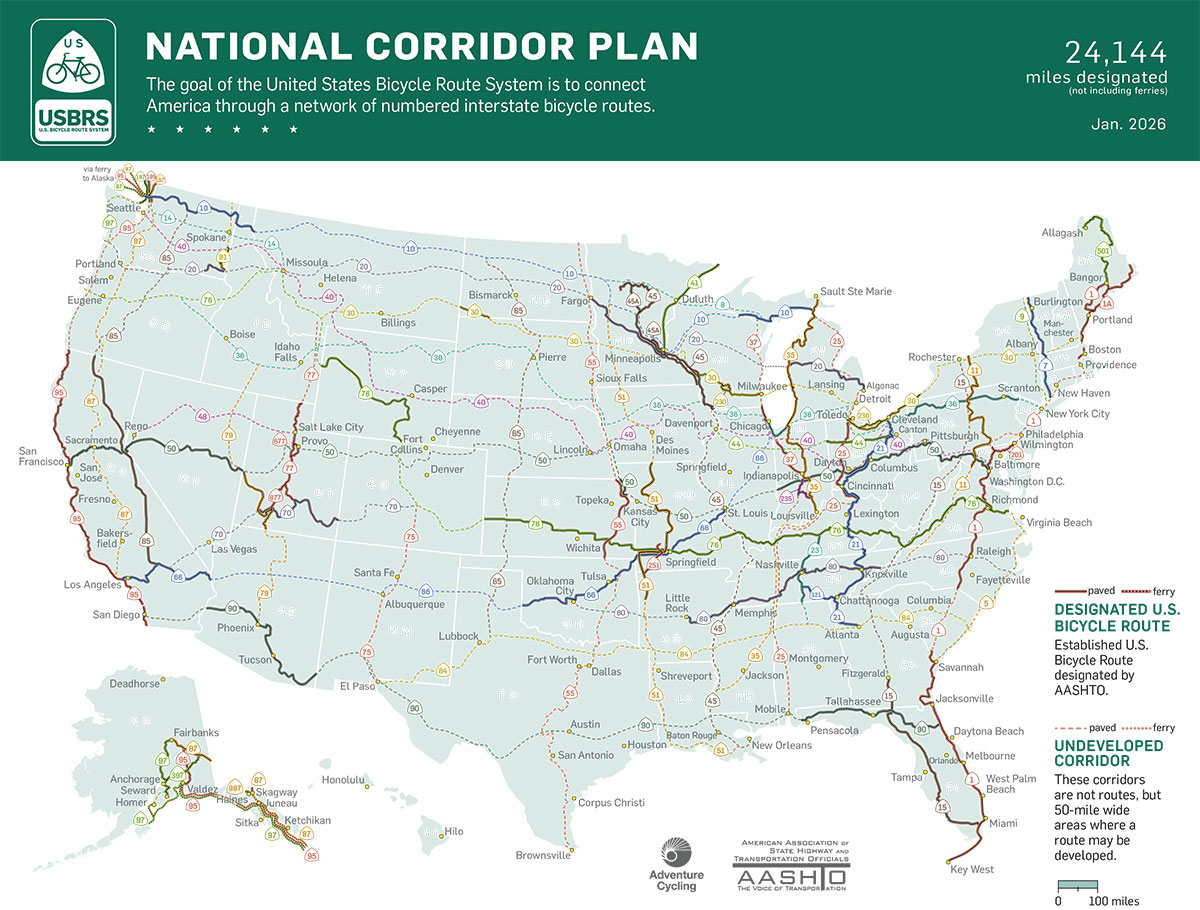
In California, USBR 50 now includes a major improvement along the El Dorado Trail: the Missouri Flat Road bicycle and pedestrian bridge in El Dorado County. The new bridge safely connects the El Dorado Trail across Missouri Flat Road, creating a better experience for people walking and biking through the corridor. For the USBRS, improvements like this matter because they show how a local trail investment can strengthen a larger bike travel corridor.
In Minnesota, several updates moved USBRS routes onto safer and more intuitive trail infrastructure. Portions of USBR 20 and USBR 45 were realigned to the Beaver Island Trail, creating a more continuous experience by keeping cyclists on the trail instead of directing them onto the highway. Portions of USBR 41 were moved to the Gitchi-Gami State Trail, including the recently completed Tofte Gap section, helping riders stay on separated trail rather than highway segments. USBR 45A was also updated to use a newly completed midblock crossing, creating a more direct and intuitive route for cyclists.
In Ohio, USBR 21 was realigned onto a newly extended section of the Holmes County Trail, moving riders off-road for four miles between Glenmont and just west of Killbuck. In North Carolina, two USBR 1 updates shifted short segments from on-road to off-road greenways, including Black Creek Greenway and White Oak Creek Greenway. These changes matter because they make the routes safer and more comfortable for riders while showing how the USBRS continues to evolve as better infrastructure becomes available.
Together, these updates show what long-term route stewardship looks like in practice. A designated route stays useful over time not by remaining fixed, but by evolving as safer, more connected options become available. A living system gets better, not just bigger.
Help us celebrate better bicycle travel by riding a USBRS route! You can find all USBRS routes on our interactive USBRS map.
ACA Amplifies What Matters
Advocacy also means adding our voice when decisions are being made. Through congressional meetings, sign-on letters, endorsements, and state planning efforts, Adventure Cycling helps elevate issues that affect people who travel by bike.
This year, that included showing up at the National Bike Summit in Washington, D.C., where Adventure Cycling joined advocates from across the country to meet with lawmakers and discuss the federal policies that shape active transportation, road safety, and bike access.
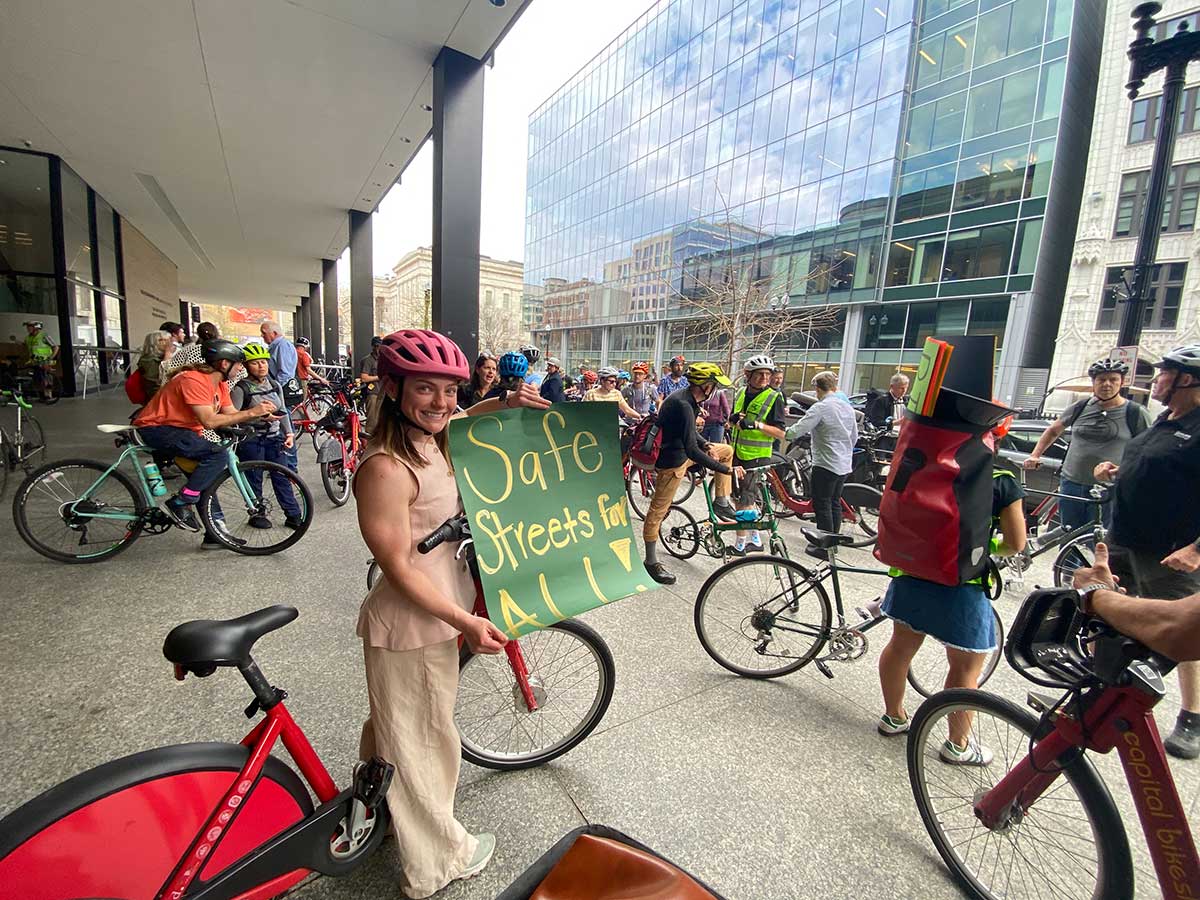
Those conversations matter because bike travel depends on decisions made at every level of government: from how roads are designed, to how safety funding is prioritized, to whether bikes are considered in broader transportation systems.
Adventure Cycling also added its voice to policy and funding efforts connected to rider safety, public lands access, and route-based infrastructure.
- We endorsed the Magnus White and Safe Streets for Everyone Act of 2026, legislation aimed at improving vehicle safety technology by enhancing automatic emergency braking systems’ abilities to better recognize and respond to bicyclists, pedestrians, motorcyclists, and other vulnerable road users. The goal is to help prevent crashes and reduce traffic fatalities.
- We also joined outdoor recreation partners in supporting recreation funding for the U.S. Forest Service and Bureau of Land Management, calling for the staffing, planning capacity, and resources needed to maintain trails, manage growing recreation demand, and implement the EXPLORE Act.
- And we supported San Bernardino County Transportation Authority’s BUILD grant application for Route 66 bridge replacements, adding a bike travel perspective to a broader infrastructure project along the same historic corridor as Adventure Cycling’s Bicycle Route 66.
These actions matter because policy decisions are not abstract. They shape the roads you ride, the trails you access, the public lands you explore, and the transportation options that help connect one part of a trip to the next.
When Adventure Cycling adds its voice, we bring the perspective of bike travelers, route users, members, and communities who know that safer roads, better access, and continued investment are essential to the future of bike travel.
Partnering for Powerful Outcomes
Adding our voice is one part of advocacy. Staying connected to the people and coalitions moving this work forward is another.
Adventure Cycling’s advocacy is stronger because we work alongside partners with deep expertise in transportation policy, public lands, trails, passenger rail, active transportation funding, and outdoor recreation access. These relationships help us stay current on fast-moving issues. Strong partnerships also allow us to bring a bike travel perspective into conversations that might otherwise focus only on one piece of the transportation or recreation system.
A policy decision about Amtrak can affect whether someone can connect a route by train. A public lands decision can shape whether riders can access the landscapes they travel through. A trail access campaign can determine whether local and regional connections remain open and useful for the people who depend on them. Adventure Cycling understands how decisions show up in real bike travel experiences.
This year, we’ve engaged with the League of American Bicyclists, Outdoor Alliance, Rails-to-Trails Conservancy, PeopleForBikes, IMBA, and the East Coast Greenway Alliance. We’ve also participated in ongoing spaces like the League’s Amtrak Task Force, Outdoor Alliance policy conversations, and emerging coalitions such as Safe Bridges for All.
These relationships do not always produce a single headline or quick win. But they are how advocacy stays alive between major campaigns. They help Adventure Cycling listen, learn, contribute, and be ready to act when the next opportunity arises.
You Can Take Action Now
If these issues shape your ride, your voice matters in shaping what comes next.
Adventure Cycling’s Advocacy Hub brings current opportunities together in one place. These actions are designed to help you plug into the issues shaping the future of bike travel.
Taking action does not mean you must become a policy expert. It can be as simple as submitting feedback, signing onto a campaign, sharing an issue with your riding community, or learning more about the decisions affecting the places you ride.
We recently published a guide to five bike advocacy issues every cyclist should care about, with simple ways to take action on safer streets, connected routes, public lands, transit access, and public input. If you are looking for a place to start, that is a good one.
Adventure Cycling shows up through route stewardship, policy support, and partner coalitions. But a stronger future for bike travel also depends on you speaking up for the roads, trails, public lands, and transportation systems that make bike travel possible.