Boston to Cape Cod Loop: East Coast Greenway Alliance
Ride out of Boston on river paths, roll through Providence and the old whaling towns of the South Coast, then chase the sea breeze across Cape Cod to the dunes of Provincetown.
- Distance
- 235.8 miles
- Surface
- 95% paved
- 3 days–1 week
- Route Type
- Point to Point
Get the Route in Ride with GPS
Access the details and download free digital maps
 Open in Ride with GPS
Ride the Boston to Cape Cod Loop: East Coast Greenway Alliance
Head west from Boston on river paths and rail-trails, swing south through Providence and along the South Coast to Cape Cod and Provincetown, then ferry back across the bay.
What to Expect
A five-day tour with long protected-path stretches, lively cities, coastal towns, and a satisfying sense of progression. Daily distances are moderate to ambitious, and road connectors call for confidence riding in traffic. The Sagamore Bridge crossing is a narrow sidewalk walk rather than a ride.
Few short tours join Boston and Providence with the Blackstone corridor, South Coast communities, the Cape Cod Canal, Cape Cod Rail Trail, and Provincetown in one continuous story. Returning by water turns the final view of Boston Harbor into part of the ride.
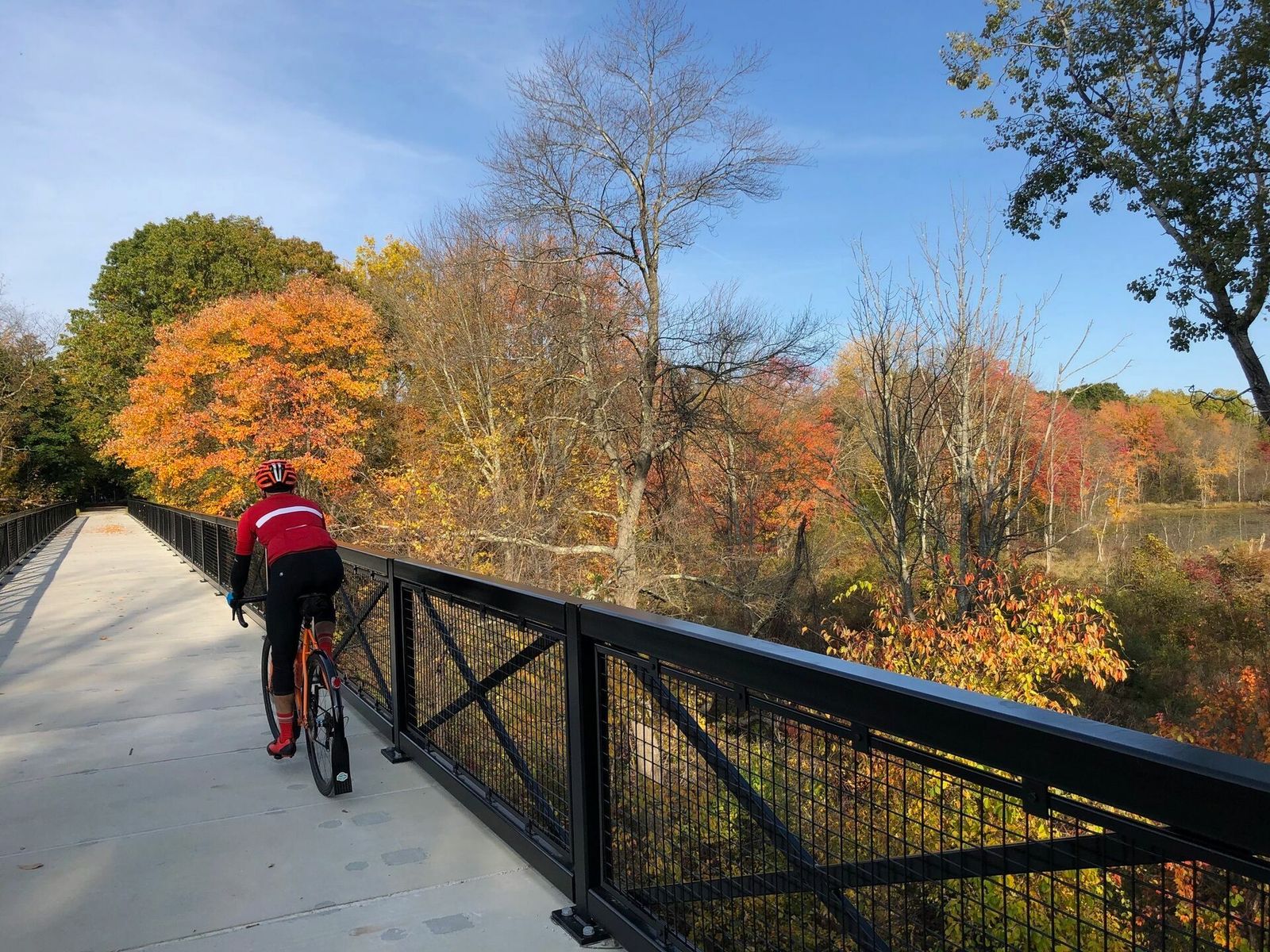
The route covers 235.8 miles and gains about 5,100 feet. The mostly gentle route uses river paths, rail-trails, roads, and coastal bikeways, with rolling sections between protected corridors. Expect river valleys and old mill towns, harbor cities, salt marshes, pine woods, cranberry bogs, and the sand dunes of the Outer Cape.
Communities and services appear throughout, but some trail and coastal stretches have longer gaps between food, water, or mechanical help. Cape Cod is busy in summer and quieter in the shoulder seasons, when some businesses reduce hours.
Late spring through early fall is the practical season, since the Provincetown ferry is seasonal. Expect coastal wind, fog, heat, and sudden rain. Autumn offers cooler riding but less daylight and reduced service schedules.

Boston to Cape Cod Loop: East Coast Greenway Alliance Photos


Plan Your Ride
Build the trip around the seasonal Provincetown ferry, then reserve four nights and pace the 236 miles across five varied riding days.
Trip Planning & Logistics
A suggested five-day itinerary overnights in Milford, Providence, New Bedford, and Brewster before finishing in Provincetown. The ferry completes the return to Boston, so confirm operating dates and bicycle policies before booking. At the Sagamore Bridge, bicycles aren’t accommodated in traffic lanes, so riders must dismount and walk the narrow sidewalk with extreme care.
A touring, hybrid, gravel, or road bike with tires around 32 millimeters or wider is suitable. Bring lights, rain and wind layers, a lock, repair supplies, and luggage compact enough for trains or ferry handling.
Indoor lodging is available in each suggested overnight community. Camping may be possible near portions of the route, including Cape Cod, but reservations and minimum stays can change; book well ahead in summer.
Boston, Providence, New Bedford, Cape Cod villages, and Provincetown offer abundant meals and groceries. Carry reserve food and water for the longer trail and canal stretches, especially outside peak season.
The Sagamore Bridge has a single narrow, steep sidewalk and no bicycle accommodation; dismount, walk, and yield to pedestrians. Check ferry schedules, Cape Cod bridge work, trail closures, and coastal weather immediately before departure.
Routes change. Bridges wash out, businesses close, and construction pops up overnight. We strive to keep routes updated as those things happen. When we learn about a change, we reroute around sections that have become dangerous or are temporarily closed for road work, bridge outages, or construction, and we update service information as businesses open, close, or move. Digital routes are updated as soon as we’ve reviewed a reported issue.
You’re often the first to spot these changes out on the road. Help us keep this route accurate for the next rider by reporting anything you notice with our Route Feedback Form.
This Route Is Part of a Community Effort
Short Routes are cyclist-submitted and Adventure Cycling approved, with the mission of inspiring more adventures from your own backyard. All possible thanks to the dedicated support of our members and donors.
-

Explore the Short Routes Network
Accessible, beginner-friendly, free routes, expanding opportunities for bicycle travel to more riders.
Learn about the Network -
Support Route Development
Our members are the reason we can offer three route networks tailored for specific experiences and riders.
Become a Member -

Stay Connected
Find your stoke with our newsletter all about routes, gear, stories, and cycling news in your inbox twice a month.
Sign up for Bike Bits
Frequently Asked Questions
A collection of free, cyclist-submitted routes built for shorter trips. Each route is designed for a trip of one to five nights, ranging from a quick overnight ride to a longer multi-day adventure. It’s the most accessible of our three route networks: no purchase required, no advanced experience assumed, just a well-vetted route you can ride over a weekend or a week off.
We launched Short Routes in August 2022 with an initial set of 12 routes, created specifically because our epic, long-distance routes don’t work for everyone. Someone with a week of vacation, or someone new to bike touring, needs a different starting point. We developed that first collection in partnership with BIPOC, LGBTQ+, women, and intersex cyclists, with routes centered near major cities like Los Angeles, Seattle, Minneapolis, Austin, Atlanta, Washington, D.C., Philadelphia, and Boston, so people could find a route close to home rather than needing to travel somewhere remote first. Since then, the collection has grown through rider submissions and partnerships with other organizations like East Coast Greenway Alliance.
It’s the only one of our three networks built primarily by the community, for the community. Typically, the route builder is local to the area, providing special knowledge about transportation logistics, services, points of interest, and more. Anyone can submit a route, but every submission goes through a staff review: checked for traffic speeds, shoulder width, surface conditions, and whether services like food, water, and camping are realistically spaced for a loaded touring bike.
Riders who don’t have weeks to spend in the saddle, and riders who’ve never done a multi-day bike trip before. The collection was built with input from locals and includes routes near major cities, so that cyclists who live far from the endless miles of gravel roads or remote bikepacking routes have great routes mapped near them.
No. Many of our Short Routes are built to be beginner-friendly, though all are worth riding no matter your experience level. Because each one runs just one to five nights, it’s a much lower commitment than a cross-country tour, which makes it a good place to start if you’ve never done a multi-day ride.
Anyone can submit. You don’t need any official affiliation with Adventure Cycling. Head to our route submission form, and come prepared with three things: at least 10 photos from the route, a written description covering the highlights, navigation notes, services along the way, seasonal considerations, and a short bio about you as the route’s creator, and a Ride with GPS route that includes automatic cuesheetsand custom points of interest for things like lodging, food, bike shops, and any hazards.
It needs to take a beginner one to five nights, cover 50 to 200 total miles, and be located anywhere in the U.S. or Canada. Beyond that, we’re mainly checking for safety. A route can’t put a fully loaded touring cyclist through excessive hazards, so we look at things like traffic speed, shoulder width, road surface, and whether food, water, and camping are realistically spaced along the way.
It helps if you rode it within the past year or so. Those submissions move through review faster, since conditions on the ground are more likely to still match what you’re describing. Older routes can still be submitted, but they may take longer to review since we may need to double-check that services and conditions haven’t changed.
Review typically takes several weeks. We check every submission for safety and accuracy and reserve the right to edit before publishing. If your route is approved, we’ll follow up with you by email.